The digital landscape is currently undergoing a tectonic shift. For the past decade, content creation was defined by the “sweat equity” of the individual—hours spent editing video frames, agonizing over SEO keywords, and meticulously designing social media graphics. Today, we have entered the era of the AI-Augmented Creator.
Artificial Intelligence (AI) is no longer a futuristic concept or a niche tool for software engineers. It has become the “Co-Pilot” for the modern solopreneur. Whether you are a YouTuber, a blogger, a podcaster, or a social media influencer, AI for content creators represents the single greatest opportunity to scale production, enhance quality, and diversify revenue streams without increasing headcount.
In this comprehensive guide, we will explore the multifaceted ways AI can be leveraged to build a profitable online business, the tools that are defining the industry, and the strategic frameworks you need to stay ahead of the curve.
Part 1: The New Paradigm of Content Creation
The Shift from Creation to Curation
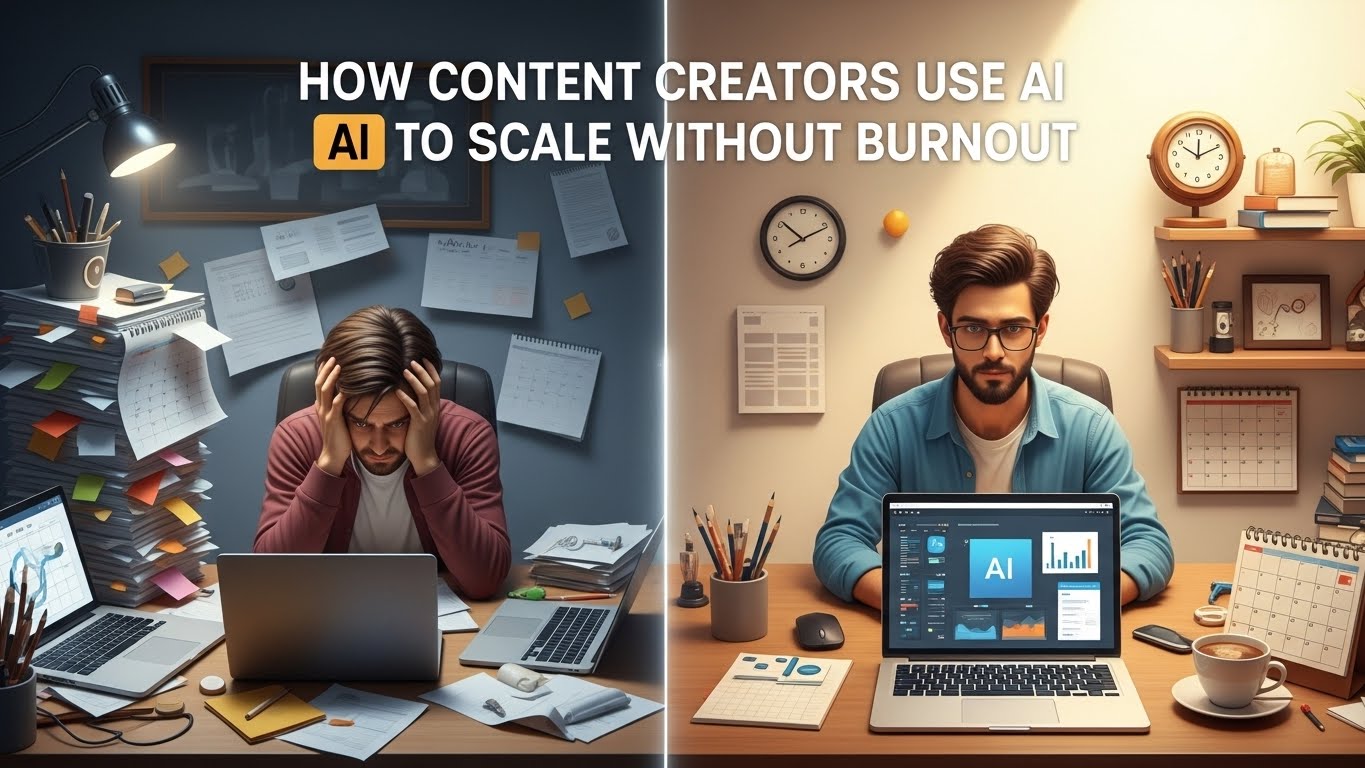
Traditionally, the bottleneck of any content business was the creator’s own time. You could only write so many words or edit so many videos in a day. AI flips this script. AI allows creators to shift their focus from manual execution to creative direction.
When using AI for content creators, your role evolves into that of an Editor-in-Chief. You provide the vision, the prompts, and the final quality control, while the AI handles the heavy lifting of generation. This allows for a 10x increase in output, which is the primary driver of increased revenue in the attention economy.
Why Now? The Convergence of Quality and Accessibility
We have reached a “Goldilocks zone” where AI tools are sophisticated enough to produce professional-grade work but accessible enough for anyone to use without a degree in data science. Tools like ChatGPT (text), Midjourney (images), and ElevenLabs (voice) have democratized high-end production.
Part 2: The Best AI Tools for Content Creators (Categorized)
To work smarter, you need a specialized “stack.” Using the right tool for the right task is the difference between a professional result and “AI slop.”
1. Writing and Research (AI for Bloggers)
For those in the written word space, AI is a research assistant that never sleeps.
- Claude 3.5 Sonnet (Anthropic): Currently favored by many professional writers for its “human-like” nuance. It is exceptional for long-form blogging and maintaining a specific brand voice.
- Perplexity AI: Think of this as “Google on steroids.” It doesn’t just give you links; it synthesizes the internet into cited reports. For AI for bloggers, this is essential for fact-checking and deep research.
- Jasper: Specifically built for marketing. It understands AIDA (Attention, Interest, Desire, Action) and other copywriting frameworks that drive conversions.
2. Visuals and Brand Identity
Visuals define a brand. AI tools for creators have moved past “weird-looking hands” to professional-grade design.
- Midjourney v6: The gold standard for hyper-realistic imagery. Use it for blog headers, YouTube thumbnails, and social media backgrounds.
- Canva Magic Studio: Canva has integrated AI into every corner of its platform. Features like “Magic Expand” (filling in the edges of a photo) and “Magic Edit” (swapping objects in a photo) save hours of Photoshop labor.
- Adobe Firefly: Excellent for creators who still use the Creative Cloud but want AI to handle the mundane tasks like object removal or generative fill.
3. Video Production and Animation
Video is the most consumed form of content but also the most labor-intensive.
- Descript: An industry-changer. It allows you to edit video by editing text. If you say “um” or “uh,” you just delete the word from the transcript, and the video edit follows.
- Runway Gen-3: Allows creators to generate B-roll footage from simple text prompts. Need a shot of a “futuristic city at sunset” but don’t have the budget for a film crew? AI generates it in seconds.
- OpusClip: Takes a long YouTube video and automatically finds the most “viral” moments, crop them for vertical viewing, and add captions for TikTok/Reels.
4. Audio and Podcasting
- ElevenLabs: The undisputed leader in AI voice. Whether you are narrating a blog post or creating a faceless YouTube channel, their voices are indistinguishable from humans.
- Adobe Podcast (Enhance): Transforms low-quality bedroom recordings into professional studio-quality audio with one click.
Part 3: Strategic Workflow Integration
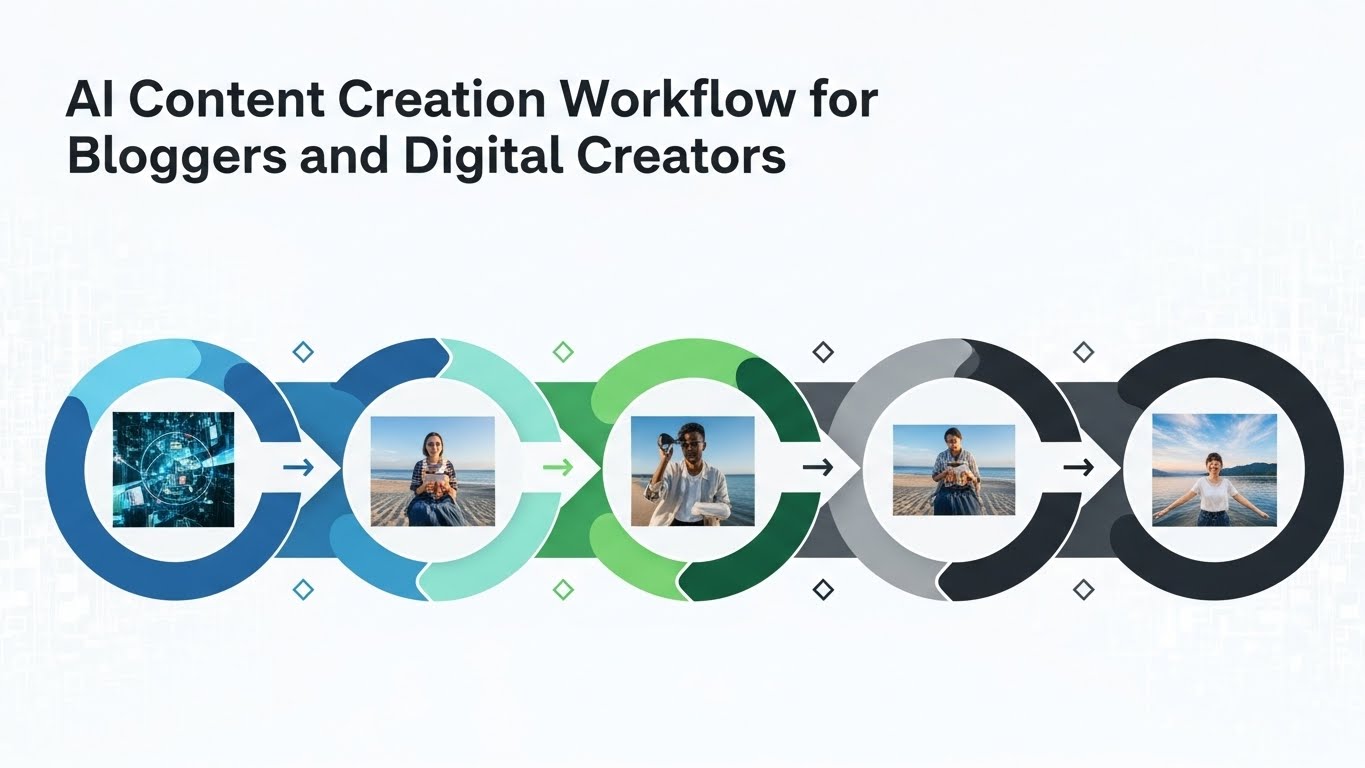
Having the tools is one thing; making them work together is another. To truly use AI content creation to work smarter, you must build a “Content Waterfall.”
The “Content Waterfall” Method:
- The Seed: Record one 10-minute high-quality video or audio piece.
- Transcription: Use Descript to get a perfect transcript.
- Blogging: Feed that transcript into Claude to generate a 1,500-word SEO-optimized blog post (AI for bloggers).
- Short-Form: Use OpusClip to turn the 10-minute video into 5 TikToks/Reels.
- Graphics: Use Midjourney to create a custom thumbnail and blog header based on the core themes.
- Social Media: Use ChatGPT to turn the blog post into a 10-post X (Twitter) thread and a LinkedIn carousel.
The Result: From one 10-minute recording, you have 10+ assets across 5 platforms. This is how you win the volume game in 2026.
Part 4: Monetization Models Powered by AI
How does “more content” actually translate into “more money”? Let’s break down the primary monetization models.
1. Faceless YouTube Channels
One of the most lucrative ways to use AI is building “faceless” channels.
- The AI Workflow: ChatGPT for scripts, Midjourney for visuals, HeyGen for AI avatars, and ElevenLabs for voiceovers.
- Revenue: AdSense, sponsored segments, and affiliate links.
- The Edge: You can run five channels in different niches simultaneously using the same AI workflow.
2. High-Velocity SEO Blogging
While some fear AI will “kill” SEO, the reality is that AI allows you to dominate “top-of-funnel” traffic.
- The AI Workflow: Use tools like SurferSEO to generate articles that cover an entire niche (e.g., “Sustainable Gardening”) in a month, establishing instant topical authority.
- Revenue: Display ads (Mediavine) and high-ticket affiliate marketing.
3. AI-as-a-Service (Freelancing 2.0)
Content creators can pivot into “AI Content Strategists.”
- Revenue: High-ticket retainer fees for small businesses that need content but don’t know how to use AI.
- The Edge: You can fulfill work in 2 hours that used to take 20, maintaining high margins.
Part 5: The Ethical Framework and the “Human Loop”
To truly make money with AI for content creators, you must avoid the “AI-Slop” trap. If your content looks and feels like a robot wrote it, your audience will leave, and search engines will penalize you.
The 80/20 Rule of AI Content
- 80% AI Production: Research, drafting, basic editing, initial image generation.
- 20% Human Curation: Adding personal anecdotes, fact-checking, injecting “hot takes,” and final stylistic polish.
The Problem of Hallucinations
AI can lie confidently. As a professional creator, your reputation is your currency. You must fact-check every statistic and quote. Using tools like Perplexity AI, which cites its sources, is a safer bet for research-heavy content.
Transparency and Trust
Currently, there is a debate about whether to disclose AI use. In the long run, transparency builds trust. Whether through a small disclaimer or by being open about your “AI-powered process,” honesty protects your brand from future “AI-labeling” updates from platforms like TikTok or Google.
Part 6: Overcoming the Learning Curve
The biggest barrier to using AI tools for creators isn’t the cost; it’s the “Prompt Engineering.”
How to Prompt Like a Pro:
- Assign a Role: “You are an expert SEO copywriter with 10 years of experience in the SaaS niche.”
- Provide Context: “I am writing a blog post for small business owners who are afraid of tech.”
- Define the Goal: “The goal is to convince them that AI is a tool for growth, not a threat.”
- Set Constraints: “Do not use jargon. Use short sentences. Avoid words like ‘tapestry’ or ‘delve’.”
Part 7: The Future – Agentic Workflows
The next frontier of AI for content creators is “Agents.” These are AI programs that can perform multi-step tasks autonomously.
Imagine an agent that:
- Monitors your niche for trending news.
- Drafts a response video script.
- Generates the visuals.
- Schedules the post for when your audience is most active.
This level of automation is coming in late 2025/2026. The creators who start using basic AI tools today will be the ones positioned to lead these “Agentic” media empires tomorrow.
Part 8: Conclusion – The Path Forward
The fear that AI will replace creators is misplaced. AI will replace creators who refuse to use AI.
By embracing AI for content creators, you are not taking a shortcut; you are utilizing a lever. Archimedes said, “Give me a lever long enough… and I shall move the world.” In the digital age, AI is that lever.
The barrier to entry for high-quality content has been obliterated. The only remaining barrier is your imagination and your ability to direct these powerful tools toward a specific goal. Start small, experiment with one tool (like Claude or Descript), and build your AI-powered empire one prompt at a time.
The digital economy is waiting. It’s time to work smarter, not harder.
Key Takeaways for the Reader:
- Volume + Quality = Growth: AI allows you to achieve both simultaneously.
- Repurpose Everything: Use the “Waterfall” method to maximize your reach.
- Human in the Loop: Always add your “soul” to AI content to satisfy Google’s E-E-A-T and your audience’s trust.
- Pick Your Stack: Start with one tool for text (Claude), one for video (Descript), and one for visuals (Canva).