The digital creator economy has hit a point of no return. In 2026, the distinction between a “content creator” and an “AI operator” has almost entirely vanished. We are no longer debating whether AI should be used; we are debating which AI agents provide the most authentic output and the highest ROI.
For bloggers, YouTubers, and social media influencers, the sheer volume of tools available is overwhelming. The “AI Gold Rush” of 2023-2024 has matured into a sophisticated ecosystem of specialized software. To stay competitive, you don’t need every tool—you need the right stack.
In this exhaustive 2026 guide, we provide an honest, field-tested review of the best AI tools for content creators. We’ve moved past the honeymoon phase of generic chatbots; today, we look at the tools that offer precision, brand-alignment, and true workflow automation.
Part 1: The Writing & Editorial Powerhouses
The evolution of the “Brain” tools.
In 2026, writing AI has moved beyond “predicting the next word.” The best tools now understand context, brand voice, and real-time factual verification.
1. Claude 4 (Anthropic)
While GPT-4 started the revolution, Claude 4 has become the gold standard for high-end content creators who prioritize nuance and “human-like” flow.
- Best For: Long-form blogging, scriptwriting, and nuanced storytelling.
- The Honest Review: Claude 4’s primary advantage is its “Constitutional AI” framework, which leads to less “robotic” fluff. It handles a 200,000-word context window with ease, meaning you can feed it your entire 5-year blog history, and it will write a new post that perfectly matches your unique cadence.
- Pros: Exceptional at avoiding clichés; superior creative writing; high factual accuracy.
- Cons: Stricter safety filters can sometimes block edgy or controversial creative content.
2. Jasper.ai (The Enterprise Creator Suite)
Jasper has evolved from a simple wrapper into a full-scale “Content Operations” platform.
- Best For: Marketing teams and professional bloggers who need to scale output across multiple channels.
- The Honest Review: Jasper’s “Brand Voice” feature is now scarily accurate. In 2026, it doesn’t just copy your tone; it understands your business goals. Its integration with SEO tools (like SurferSEO) makes it a one-stop-shop for traffic-focused creators.
- Pros: Built-in campaign management; excellent team collaboration features.
- Cons: One of the more expensive options on the market; potentially overkill for solo creators.
3. KoalaWriter
For the SEO-focused blogger, KoalaWriter remains the “speed king.”
- Best For: Affiliate marketers and niche site owners.
- The Honest Review: It’s a specialized tool that focuses on one thing: generating high-ranking articles in one click. In 2026, it includes real-time Amazon data integration for product reviews, making it indispensable for affiliate creators.
- Pros: Extremely user-friendly; incredible speed; direct WordPress/Shopify integration.
- Cons: Requires more human editing for “soul” and personality than Claude or Jasper.
Part 2: Video Production & Visual Storytelling
The “Hollywood in a Box” era.
Video is where AI has made the most staggering leaps. The “uncanny valley” has been largely conquered, and production costs have plummeted.
4. Runway Gen-4
The leader in generative video. We are no longer looking at “blobby” transformations; we are looking at cinematic consistency.
- Best For: YouTubers needing high-end B-roll and filmmakers.
- The Honest Review: Gen-4 allows for “Motion Brush” precision. You can take a static image and tell the AI exactly which part to move—the water in the background, the hair in the wind, or the car on the road. It has effectively replaced the need for most stock footage subscriptions.
- Pros: Unmatched visual quality; 4K output; physical world consistency.
- Cons: High computational cost means it’s pricey and can be slow to render.
5. HeyGen (Avatar 3.0)
If you’re running a faceless channel or globalizing your brand, HeyGen is the 2026 industry leader.
- Best For: Educational content, “Faceless” YouTube channels, and multi-lingual creators.
- The Honest Review: Their “Instant Avatar” technology is now indistinguishable from reality. You can record a 2-minute video of yourself, and the AI can then generate hours of content using your likeness and voice with perfect lip-syncing. Their “Video Translation” feature also automatically dubs your videos into 40+ languages while adjusting your lip movements to match the new language.
- Pros: Eliminates the need for a camera/lighting setup for every video; perfect for scaling.
- Cons: Ethical concerns require creators to be very careful with disclosures to maintain audience trust.
6. Descript (The “Under-the-Hood” Workhorse)
Descript changed editing by making it text-based. In 2026, it’s an AI-first production studio.
- Best For: Podcasters and YouTubers.
- The Honest Review: The “Eye Contact” fix and “Studio Sound” features are now standard. The most impressive 2026 update is “Underdub,” which allows you to change what you said in a video by simply typing a new word; the AI generates the video frames of your face moving and the audio of your voice to match the correction.
- Pros: The fastest way to edit video/audio; incredible AI speech-to-text.
- Cons: The interface has become complex as they’ve added more features.
Part 3: Image Generation & Graphic Design
Beyond the “AI Look.”
In 2026, “best AI tools for content creators” must include tools that produce brand-ready graphics that don’t look like generic AI art.
7. Midjourney v8
Still the king of pure aesthetic quality.
- Best For: Blog headers, social media posts, and artistic assets.
- The Honest Review: Midjourney v8 has solved the “text-in-image” problem and the “finger” problem entirely. It now features a robust “Web UI,” moving away from the clunky Discord interface. For creators, the “Character Consistency” tag is the killer feature—you can create a character and place them in different scenes across your entire brand story.
- Pros: Most artistic and realistic output; massive community for inspiration.
- Cons: Steeper learning curve for “prompt engineering” compared to DALL-E.
8. Canva Magic Studio (2026 Edition)
Canva didn’t fight the AI revolution; they led it.
- Best For: Social media creators, Pinterest managers, and non-designers.
- The Honest Review: Canva’s “Magic Switch” allows you to turn a YouTube thumbnail into an Instagram Story, a LinkedIn carousel, and a blog header with one click. Its AI design suggests layouts based on your brand colors and current design trends.
- Pros: Everything in one place; incredibly intuitive; huge library of assets.
- Cons: The AI-generated images are good but not yet at Midjourney’s level of “fine art.”
Part 4: Audio, Voice, and Music
The Sound of the Future.
Audio quality can make or break a creator. These tools ensure you sound professional even if you’re recording in a bedroom.
9. ElevenLabs (Voice & Dubbing)
ElevenLabs has essentially won the AI voice war.
- Best For: Narrating blog posts, faceless videos, and international expansion.
- The Honest Review: Their “Professional Voice Cloning” is so good that voice actors are now licensing their voices through the platform for passive income. For creators, the “Speech-to-Speech” feature is the standout—you can record a “flat” take of a script, and ElevenLabs will apply the emotion and cadence of a professional narrator to your words.
- Pros: Most emotive voices on the market; low latency; huge language library.
- Cons: Pricing can scale quickly for high-volume users.
10. Udio / Suno (AI Music Generation)
The debate over AI music is loud, but for creators, these tools are a godsend for royalty-free, custom soundtracks.
- Best For: Background music for videos and intro/outro themes.
- The Honest Review: You can now generate a full, high-fidelity 3-minute track in any genre with specific lyrics and mood. It’s no longer “elevator music”; it’s radio-quality production. This saves creators from the copyright “strike” headaches of using popular music.
- Pros: Custom-tailored music for your specific video length and vibe.
- Cons: Legal landscape regarding training data is still evolving in 2026.
Part 5: Distribution & Social Media Management
Solving the “Treadmill” Problem.
Creating content is only half the battle. Distribution is where the money is made.
11. OpusClip Pro
The “Short-Form Multiplier.”
- Best For: YouTubers and Podcasters.
- The Honest Review: Feed it a 60-minute podcast, and it will return 15 viral-ready “Shorts.” In 2026, it doesn’t just look for loud noises; it uses “Engagement Prediction” to find clips that match current TikTok or Reel trends. It even handles the B-roll and captions automatically.
- Pros: Saves dozens of hours of manual editing; high viral potential.
- Cons: Can sometimes miss the “setup” of a joke or story, requiring minor manual adjustments.
12. Taplio (for LinkedIn) / FeedHive (for Multi-channel)
AI as a Social Media Manager.
- Best For: Personal branding and Twitter/LinkedIn growth.
- The Honest Review: These tools use AI to analyze what’s working in your niche right now. Taplio can draft a week’s worth of LinkedIn posts in your voice based on trending topics. FeedHive uses AI to “recycle” your best-performing content at the optimal times for engagement.
- Pros: Keeps you consistent without manual effort; excellent analytics.
- Cons: Can lead to a “sterile” social media presence if you don’t inject personal replies.
Part 6: The “Agentic” Workflow – The 2026 Edge
The biggest shift in 2026 is the move from “tools” to “Agents.”
An agent is an AI that doesn’t just do a task but manages a goal. Tools like MindStudio or Zapier Central now allow creators to build their own custom “Staff.”
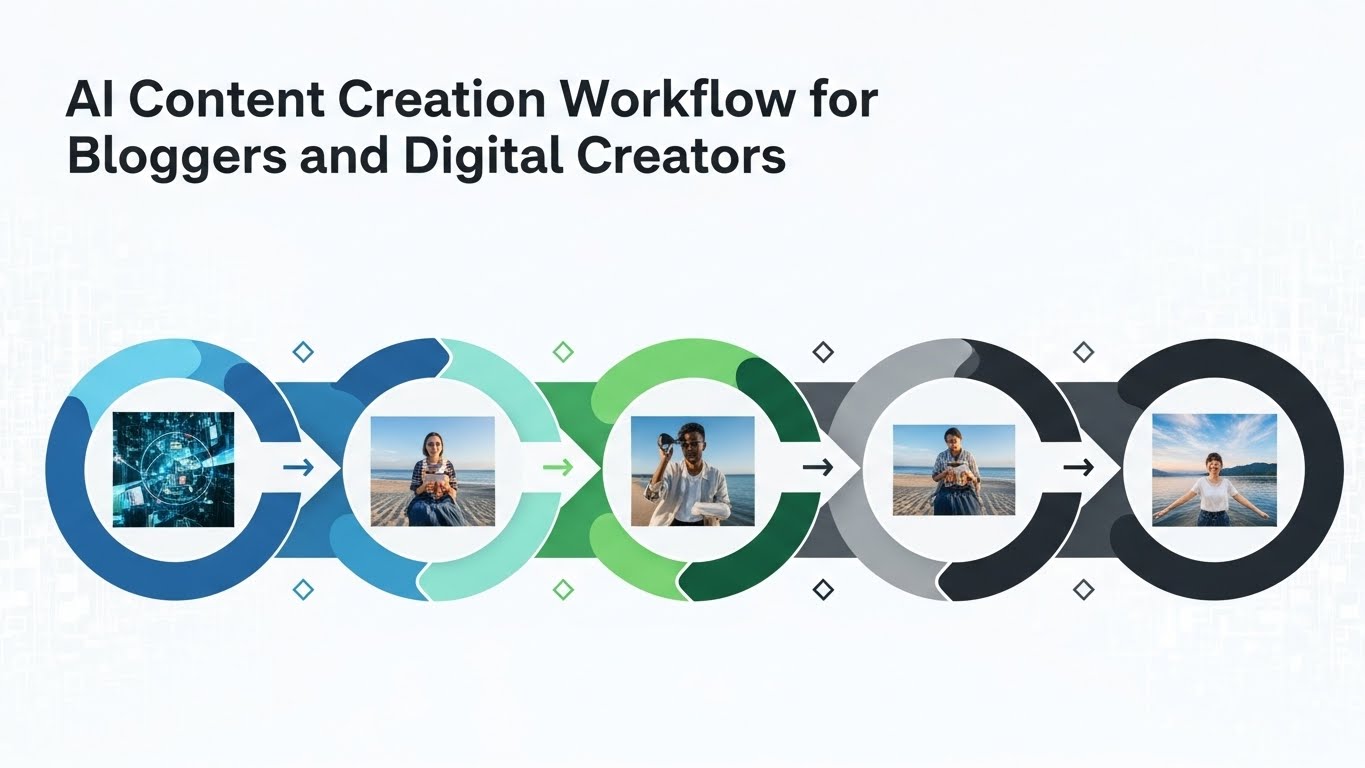
Example of an Agentic Workflow for a Blogger:
- The Research Agent: Scours the web for new trends in your niche every morning.
- The Drafting Agent: Takes the research and creates a 2,000-word draft in your style using Claude 4.
- The Image Agent: Generates custom images for the post via Midjourney.
- The Distribution Agent: Takes the published post and turns it into a thread for X (Twitter) and a script for a TikTok video.
By 2026, the best AI tools for content creators are those that talk to each other. If your tools don’t integrate via API or Zapier, they are slowing you down.
Part 7: Honesty Check – What AI Cannot Do (Even in 2026)
As an experienced professional, I must be clear: AI is a multiplier, not a substitute.
1. Unique Human Perspective (The “POV”)
AI can summarize the news, but it cannot have a “take” on it based on 20 years of lived experience. The most successful creators in 2026 are those who use AI for the “grunt work” and spend their extra time developing a more radical, human, and personal perspective.
2. Physical Community & Trust
AI can generate 1,000 comments, but it cannot build a community. In 2026, the “Human Premium” is real. Audiences are increasingly looking for “Proof of Human”—live streams, behind-the-scenes content, and real-world meetups.
3. Fact-Checking (The Hallucination Problem)
While significantly improved, AI in 2026 can still “hallucinate” or confidently state falsehoods. If your blog relies on data, you must be the final line of defense. A single viral “fake news” post can destroy a creator’s reputation.
Part 8: Choosing Your “Stack” Based on Your Budget
The “Starter” Stack ($50 – $100/mo)
- Writing: ChatGPT Plus or Claude Pro ($20)
- Visuals: Canva Pro ($15)
- Video: CapCut Desktop (Free/Pro)
- Distribution: Manual or Buffer (Free)
The “Pro” Stack ($300 – $500/mo)
- Writing: Jasper.ai or Koala ($80+)
- Visuals: Midjourney + Adobe Firefly ($40)
- Video: Descript + OpusClip ($60)
- Audio: ElevenLabs ($22+)
- Management: Taplio/FeedHive ($50)
The “Media Empire” Stack ($1,000+/mo)
- Custom Agents: MindStudio or custom GPT API builds.
- Full Production: HeyGen (for scale) + Runway Gen-4 (for quality).
- Enterprise SEO: SurferSEO or MarketMuse.
Conclusion: The Path Forward
The year 2026 is the year of the “Solopreneur Powerhouse.” One person, armed with the best AI tools for content creators, can now out-produce a 20-person media company from 2020.
However, the “Honest Review” is this: The tool is only as good as the director. If you use AI to be generic, you will be replaced by AI. If you use AI to be more of yourself, more often, and on more platforms, you will be unstoppable.
The winners of 2026 are not the best “writers” or “editors”—they are the best “architects” of AI workflows. Start building your stack today.
Key Takeaways Checklist:
SEO Keywords Optimized: best AI tools for content creators, AI for bloggers, AI for YouTubers, AI video editing 2026, AI writing reviews, Claude 4 vs GPT-4, AI image generation, content automation tools.