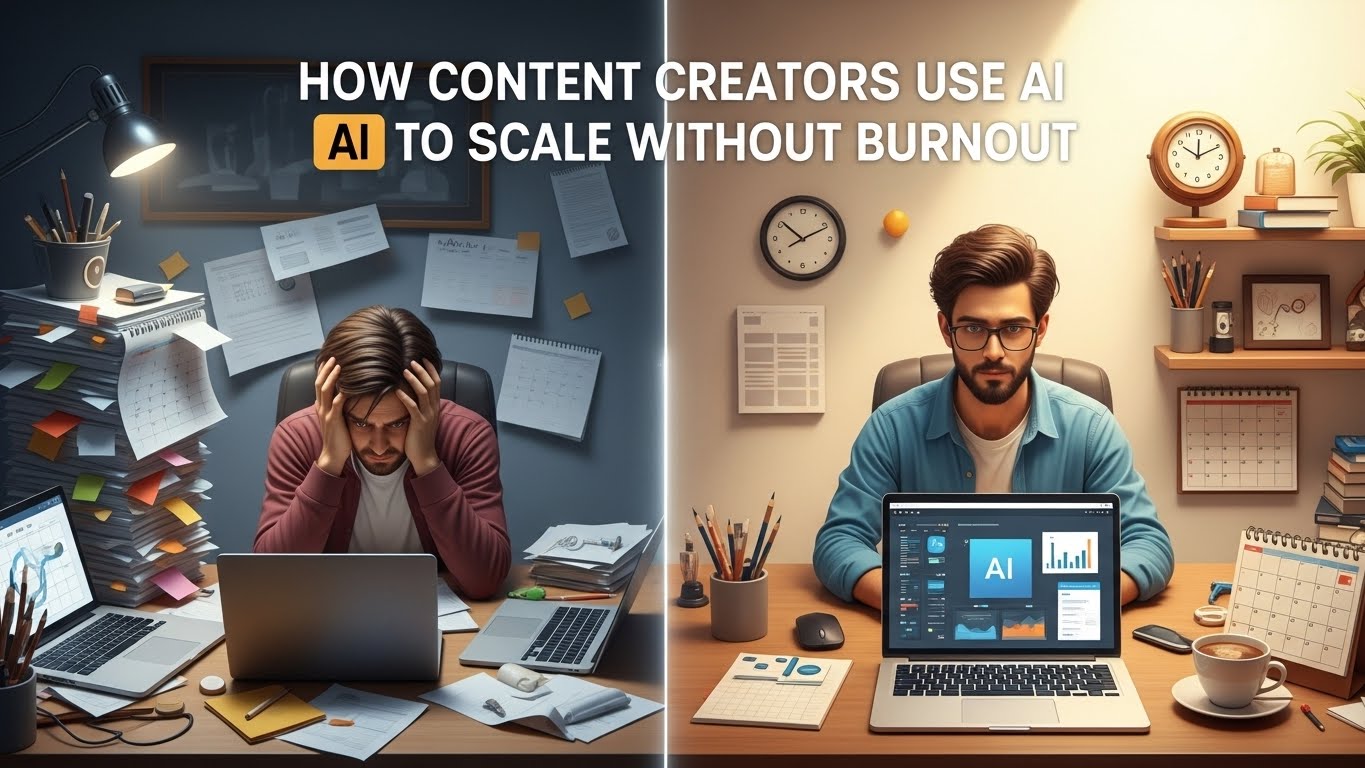
The “Creator Burnout” epidemic is real. In the last decade, the digital economy transitioned from a space of hobbyist blogging into a high-stakes, 24/7 production cycle. Today, a professional content creator is expected to be a writer, a videographer, an SEO specialist, a social media manager, and a community lead—all while maintaining a consistent “personal brand” that never takes a day off.
The math of the old creator economy was simple but brutal: Output = Time x Effort. If you wanted to double your revenue, you usually had to double your hours.
But in 2026, the equation has changed. We have entered the era of the Augmented Creator. By leveraging AI for content creators, the most successful digital entrepreneurs are decoupling their income from their manual labor. They are scaling their “media empires” not by working more, but by orchestrating a fleet of intelligent tools that handle the heavy lifting.
This in-depth guide explores how you can use AI tools for creators to achieve exponential growth, maximize your online income, and—most importantly—reclaim your time.
Part 1: The Anatomy of Creator Burnout
Before we can solve the problem with AI, we must understand why creators burn out in the first place. Burnout isn’t just “being tired”; it is the result of three specific pressures:
- Decision Fatigue: Every piece of content requires hundreds of micro-decisions (What’s the hook? Which thumbnail is better? Is this SEO-optimized?).
- The Treadmill Effect: Algorithms reward consistency. If you stop posting, your reach drops. This creates a psychological “prison” where creators feel they cannot take a vacation.
- The Context-Switching Tax: Moving from creative writing to technical SEO to video editing drains mental energy faster than the work itself.
AI content creation addresses all three of these. It reduces decision fatigue by providing starting points; it solves the treadmill effect by automating distribution; and it minimizes context-switching by acting as a “universal assistant” across all mediums.
Part 2: AI for Bloggers – Scaling the Written Word
Blogging remains one of the most stable and profitable ways to make money online, but it is also one of the most labor-intensive. Here is how professional AI for bloggers is being used to scale without losing quality.
From “Blank Page” to “Expert Review”
The most grueling part of blogging is the first draft. Modern bloggers use AI to handle the “grunt work” of drafting.
- The Strategy: Instead of writing from scratch, a creator uses Claude 3.5 Sonnet or ChatGPT to generate a comprehensive outline based on current top-performing search results.
- The Workflow: The AI drafts the informative, fact-based sections of a post (the “What” and the “How”). The blogger then steps in to provide the “Why”—the personal stories, the unique insights, and the expert opinion that AI cannot replicate.
Semantic SEO and Topical Authority
To rank on Google today, you don’t just need keywords; you need Topical Authority.
- AI tools for creators like SurferSEO or NeuronWriter analyze the top 20 search results for a specific query and tell you exactly which “entities” (related terms) are missing from your content.
- Scaling Tip: Instead of spending hours researching what terms like “carbon footprint” or “sustainable sourcing” mean in a gardening niche, you can ask an AI to: “Integrate these 15 NLP terms into my draft naturally, ensuring the reading level stays at Grade 8.”
Information Gain: The “Anti-Slop” Strategy
Google’s recent updates prioritize Information Gain. If your blog post just repeats what’s already on the internet, you will fail.
- The AI Hack: Use AI to synthesize new data. Upload a 50-page industry PDF to an AI and ask it to: “Identify three statistics that contradict the common narrative in our niche.” By including these unique insights in your blog, you provide value that generic AI-generated sites cannot match.
Part 3: Scaling Video Production with AI
Video is the most powerful medium for building trust, but it is notorious for causing burnout due to the technical barriers.
AI Scriptwriting and Storyboarding
A 10-minute video can take 20 hours of production. Half of that is often spent agonizing over the script.
- The Solution: Use AI to generate “Hook Variations.” The first 30 seconds of a video determine its success. Ask an AI to: “Write 5 different psychological hooks for a video about [Topic] using the ‘Open Loop’ curiosity technique.”
- Tools: Jasper or Copy.ai have specific templates for YouTube scripts that follow viral storytelling structures (The Hero’s Journey, Problem-Solution).
The Rise of the AI Video Editor
Editing is where projects go to die.
- Descript: This tool is the “holy grail” for video creators. It allows you to edit video by editing text. If you want to cut a boring section, you just delete the sentence in the transcript. It also features “Studio Sound,” which uses AI to make a cheap $20 microphone sound like a $1,000 professional setup.
- OpusClip: For creators on TikTok or Instagram, OpusClip is a game-changer. It takes a long-form YouTube video, identifies the most “viral” moments using AI, and automatically crops and captions them for vertical viewing.
Faceless YouTube Automation
For those who want to scale without being the face of the brand, AI content creation has made “faceless channels” incredibly lucrative.
- Workflow: Use ElevenLabs for a hyper-realistic voiceover, Midjourney for custom visual assets, and HeyGen for an AI avatar that can “speak” your script with perfect lip-syncing. This allows one creator to manage five different channels in five different niches.
Part 4: AI Tools for Creators – The Professional Stack
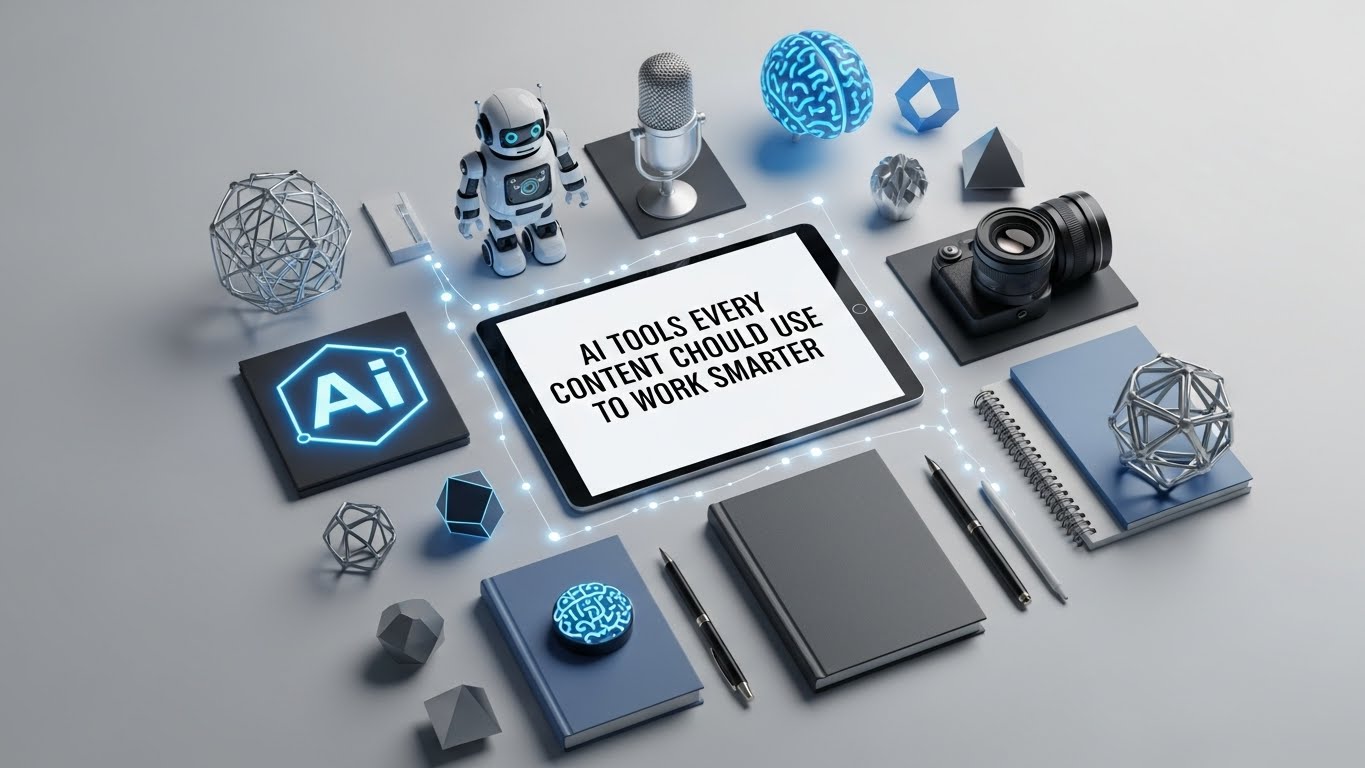
To scale without burnout, you need a coordinated “Tech Stack.” Here are the essential tools categorized by their role in your business.
1. The Strategy & Research Tier
- Perplexity AI: The best tool for real-time research. It provides cited sources, which is essential for maintaining authority and avoiding AI “hallucinations.”
- Claude 3.5 Sonnet: Currently widely regarded as the most “human” writer among AI models. It is exceptional for maintaining a brand’s unique voice.
2. The Visual & Branding Tier
- Midjourney v6: For creating high-end, custom photography and illustrations that make your blog or social media feed look premium.
- Canva Magic Studio: Essential for non-designers. Its “Magic Switch” feature allows you to turn a YouTube thumbnail into an Instagram Story with one click.
3. The Audio & Video Tier
- ElevenLabs: For voice cloning and high-fidelity narration.
- Runway Gen-3: For generating b-roll footage from text prompts, saving you from spending hundreds on stock footage sites.
Part 5: The “Content Waterfall” – Distribution Without Effort
Scaling usually requires being on every platform: X, LinkedIn, Instagram, TikTok, and a Newsletter. This is the primary cause of burnout. The solution is the Content Waterfall.
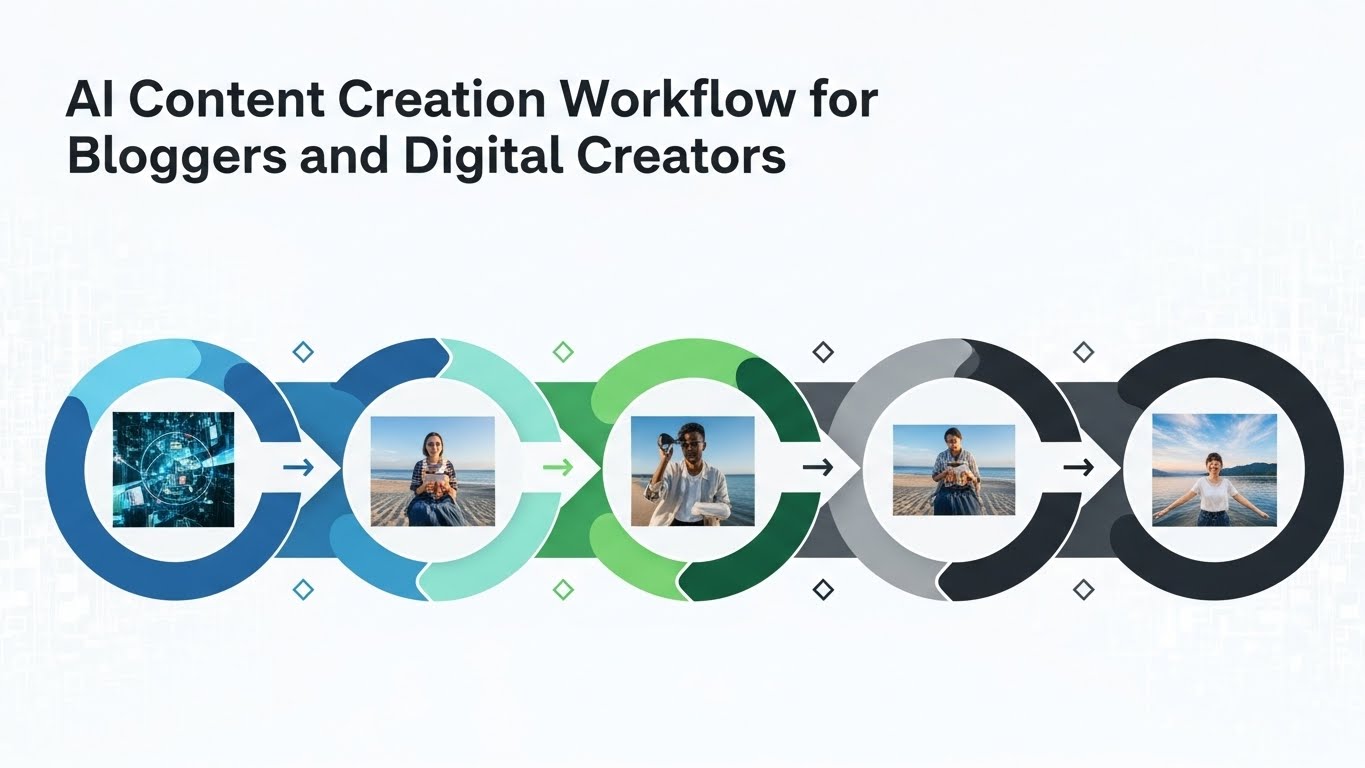
Step-by-Step AI Repurposing Workflow:
- The Source: You write one deep-dive blog post using AI for bloggers strategies.
- The Social Snippets: Feed the blog post to ChatGPT and ask: “Turn this blog post into an 8-post educational X thread, a professional LinkedIn summary, and 5 snappy Instagram captions.”
- The Newsletter: Ask the AI to: “Summarize the core 3 lessons of this post into a 300-word punchy email for my newsletter subscribers.”
- The Short Video: Use Lumen5 or InVideo to automatically turn the H2 subheadings of your blog into a slideshow video for Pinterest or YouTube Shorts.
By the end of this 15-minute process, you have content for an entire week across all platforms. You are “scaling” your presence while only doing the deep creative work once.
Part 6: The “Human-in-the-Loop” Quality Control
If you use AI to replace yourself, your brand will die. Audiences connect with humans, not algorithms. To scale successfully, you must maintain the Human-in-the-Loop model.
The “Proof of Human” Checklist:
- Fact-Checking: AI is a “prediction engine,” not a “fact engine.” Every statistic must be verified.
- The “I” Statement: AI writes in a detached, third-person perspective. Go through your AI drafts and add “I” statements. “When I first tried this…” or “I noticed that my audience usually struggles with…”
- Current Events: AI often lacks the context of “what happened this morning.” Injecting current cultural references makes your content feel fresh and alive.
Part 7: Monetization – Turning Efficiency into Profit
Scaling without burnout is only half the battle; you also need to scale your revenue. AI for content creators allows for higher-margin business models.
1. High-Volume Affiliate Marketing
Because you can produce 10 articles in the time it used to take to produce one, you can cover more “buyer intent” keywords. This allows you to scale your affiliate income across multiple niches simultaneously.
2. AI-Assisted Digital Products
Creating a course or an e-book used to take six months. With AI, you can:
- Use AI to outline the curriculum.
- Use AI to draft the worksheets.
- Use AI to write the sales page copy.
- This allows you to launch products faster, testing the market without a massive time investment.
3. Newsletter Sponsorships
A consistent, high-quality newsletter is an “owned” asset. AI makes it easy to summarize news, curate links, and maintain a weekly schedule, allowing you to charge premium prices for sponsorships.
Part 8: The Ethical and Legal Landscape in 2026
To scale safely, you must be aware of the evolving rules regarding AI.
- Transparency: Platforms like YouTube and TikTok now require creators to label “synthetic” or “altered” content that looks realistic. Disclosing your AI use actually builds trust with your audience.
- Copyright: Currently, AI-generated work cannot be copyrighted in many jurisdictions. To protect your IP, ensure there is “substantial human creative input” in your final products.
- SEO Penalties: Google does not penalize AI content, but it does penalize “unhelpful” content. If you are just churning out generic text to fill space, your rankings will eventually collapse.
Part 9: Conclusion – Embracing the Future
The creators who will dominate the next decade are not the ones who work the hardest, but the ones who leverage the most.
AI for content creators is the ultimate “force multiplier.” It allows a single mother to run a global media brand from her kitchen table. It allows a traveler to maintain a daily blog while off the grid. It allows an artist to produce high-end video without a studio.
Burnout is not a prerequisite for success. By treating AI as your “Creative Intern”—handling the research, the formatting, the basic drafting, and the distribution—you can focus on what actually matters: your vision, your voice, and your community.
The era of the “starving artist” is over. The era of the Efficient, Augmented Creator has begun.
Key Takeaways for Your Scaling Journey:
- Use AI to handle the “Blank Page”: Start with an AI-generated draft to beat procrastination.
- Repurpose via the “Waterfall”: One core piece of content should fuel all social channels.
- Focus on Information Gain: Use AI to analyze data and find unique angles that provide value.
- Stay Human: Always add your personal stories and fact-check every claim.
- Invest in a Stack: Choose 2-3 core AI tools for creators and master them.