
Table of Contents
- Introduction: The Democratization of Ability
- The Shift from “Technical” to “Creative”
- Why You Don’t Need to Code to Cash In
- Defining the Opportunity: The “AI Side Hustle”
- The Foundation: Understanding the Toolset
- Text Generators (LLMs)
- Image Generators
- Video and Audio Synthesis
- The “Human-in-the-Loop” Philosophy
- Strategy 1: Transforming Freelance Writing and Copywriting
- High-Volume SEO Blogging
- Copywriting for Direct Response
- The Editor-First Model
- Strategy 2: The Visual Revolution – Art, Design, and Merchandise
- Print on Demand (POD) Mastery with Midjourney
- Selling Stock Assets
- AI-Assisted Branding Services
- Strategy 3: Digital Publishing and Information Products
- Self-Publishing on Amazon KDP (Non-Fiction & Fiction)
- Creating Faceless YouTube Channels
- Course Creation and Curriculum Design
- Strategy 4: Service-Based AI Hustles
- Social Media Management Automation
- Translation and Localization Services
- Resume Writing and Career Coaching
- Strategy 5: The Prompt Engineering Economy
- Selling Prompts on Marketplaces
- Consulting for Small Businesses
- Strategy 6: Website Building and SEO
- Using AI for Keyword Strategy
- Programmatic SEO (The No-Code Approach)
- Critical Considerations: Ethics, Copyright, and Quality
- The Copyright Landscape
- Hallucinations and Fact-Checking
- Maintaining the Human Touch
- Conclusion: Future-Proofing Your Income
1. Introduction: The Democratization of Ability
We are currently witnessing a technological shift comparable to the invention of the internet or the smartphone. Artificial Intelligence (AI) has left the research labs and entered the hands of the general public. For decades, the ability to make money with AI was reserved for data scientists, machine learning engineers, and those with advanced degrees in mathematics.
That era is over.
Today, we are in the age of Generative AI. This technology does not require you to understand the underlying code; it only requires you to understand how to communicate with it. If you can type a sentence, you can wield the power of a supercomputer.
This shift has created a massive opportunity for beginners to generate AI income. The barrier to entry for creating high-quality writing, stunning artwork, complex code, and professional video has effectively collapsed. However, this accessibility brings competition. To succeed, you must move beyond treating AI as a toy and start treating it as an enterprise-grade employee that works 24/7.
This guide is not about how to build AI software. It is a blueprint on how to leverage existing tools to build businesses, streamline workflows, and generate revenue without writing a single line of Python.
2. The Foundation: Understanding the Toolset
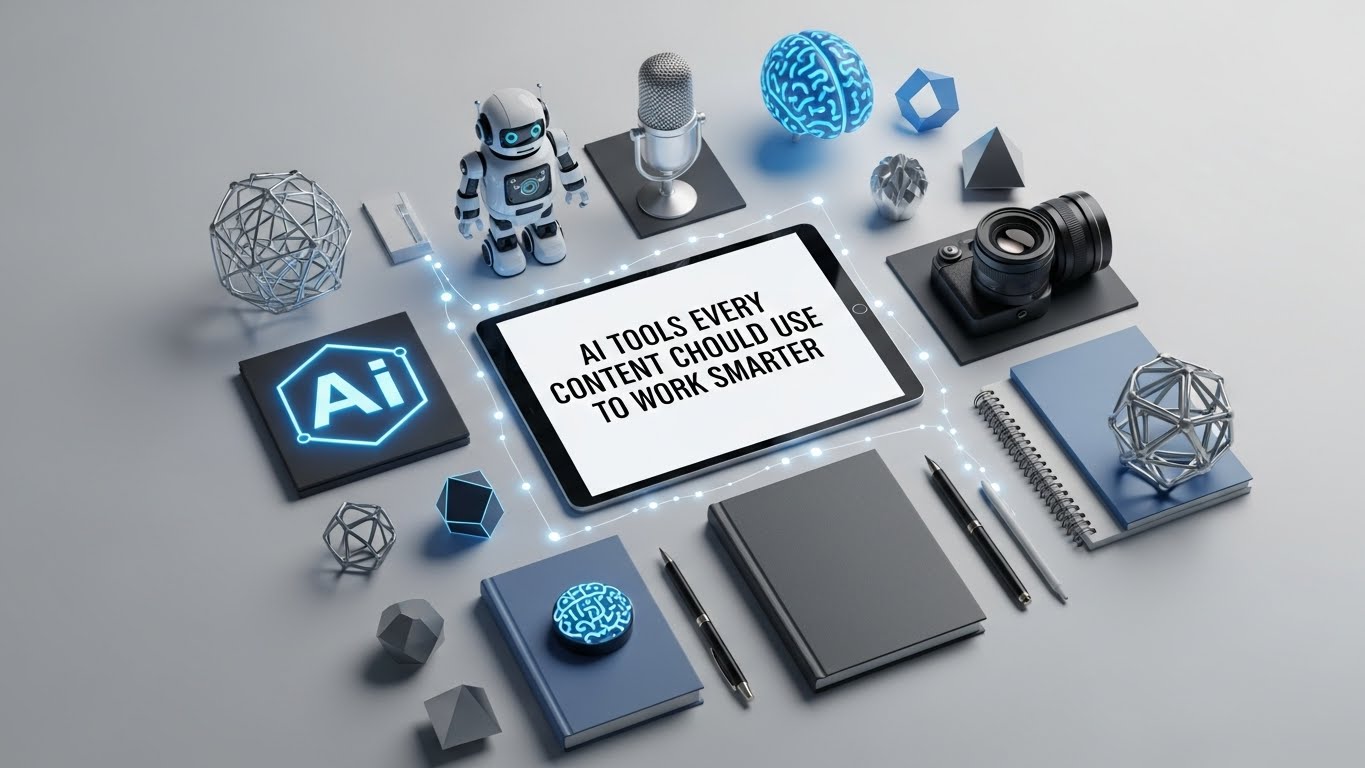
Before diving into specific income streams, you must understand the stack. To earn money with AI, you need to be familiar with the three main categories of generative tools.
Text Generators (Large Language Models)
Tools like ChatGPT (OpenAI), Claude (Anthropic), and Jasper are the engines of the text world. They predict the next word in a sequence based on massive datasets.
- Use cases: Blogging, coding assistance, email marketing, scriptwriting, summarization.
- The Skill: “Prompt Engineering”—the art of asking the right questions to get the best output.
Image Generators
Tools like Midjourney, DALL-E 3, and Stable Diffusion convert text descriptions into high-fidelity images.
- Use cases: Logo design, book covers, stock photography, website assets, concept art.
- The Skill: Visual vocabulary and style modifiers (e.g., knowing the difference between “photorealistic,” “vector art,” and “oil painting”).
Video and Audio Synthesis
Tools like Runway, Pika Labs, ElevenLabs, and HeyGen are revolutionizing media.
- Use cases: Voiceovers, faceless YouTube videos, podcast editing, video avatars.
- The Skill: Pacing, storyboarding, and multi-modal integration (combining text, image, and voice).
The “Human-in-the-Loop” Philosophy
This is the most critical concept in this article. AI is not a replacement for human judgment; it is an accelerator of human effort.
If you copy and paste raw AI output, you will fail. The internet is already flooded with low-quality, generic AI content. To build sustainable AI side hustles, you must act as the Creative Director. The AI does the heavy lifting (drafting, ideating), but you provide the strategy, the emotional nuance, and the final polish.
3. Strategy 1: Transforming Freelance Writing and Copywriting
Freelance writing is one of the most accessible ways to start, but the industry is changing. Clients no longer pay high rates for generic 500-word articles because they can generate those themselves. To make money now, you must become an AI-Assisted Editor.
High-Volume SEO Blogging
Search Engine Optimization (SEO) relies on content. Businesses need hundreds of articles to rank on Google.
- The Workflow: Use tools like SurferSEO or Frase combined with ChatGPT.
- Generate a keyword cluster (a group of related topics).
- Use AI to create detailed outlines based on current top-ranking articles.
- Generate the content section-by-section to ensure depth.
- Crucial Step: Manually inject personal anecdotes, data points, and internal links.
- The Revenue Model: Instead of charging $50 for one article that takes you 4 hours, you can charge $150 for a package of 5 articles that takes you 2 hours to generate and polish. You are selling volume and consistency.
Copywriting for Direct Response
Copywriting is designed to sell (ads, landing pages, emails). AI is excellent at understanding sales frameworks like AIDA (Attention, Interest, Desire, Action).
- The Strategy: Offer “A/B Testing Packages.”
- Tell a client: “I won’t just write one Facebook ad headline; I will provide 50 variations testing different emotional hooks.”
- Use AI to generate the variations, then use your human judgment to select the best 10 to present to the client.
The Editor-First Model
Many companies are firing writers and hiring “AI Content Editors.” Your job is not to write from scratch, but to take raw AI output and humanize it.
- Marketable Skill: Fact-checking AI hallucinations and adjusting “tone of voice” so the brand doesn’t sound robotic.
4. Strategy 2: The Visual Revolution – Art, Design, and Merchandise
You do not need to be able to draw to become a visual creator. With tools like Midjourney, your imagination is the only limit.
Print on Demand (POD) Mastery
Print on Demand allows you to sell custom designs on t-shirts, mugs, phone cases, and wall art without holding inventory. Platforms like Redbubble, Etsy (via Printful), and Amazon Merch handle the shipping.
- The AI Advantage: Traditional designers might take hours to create a complex pattern. You can generate 100 variations of a “Retro 80s Synthwave Cat” in an hour.
- Action Plan:
- Research trending niches (e.g., specific dog breeds, hobbies like knitting, funny quotes).
- Use Midjourney to create high-resolution designs. Note: Ensure you upscale images to 300 DPI for print quality.
- Upload to POD platforms.
- Use ChatGPT to write SEO-optimized product descriptions and tags.
Selling Stock Assets
Adobe Stock and other platforms have opened their doors to AI-generated content, provided it is labeled as such.
- The Opportunity: There is a massive demand for specific, niche stock photos that are hard to capture in real life (e.g., “Cyberpunk city street food vendor” or “Futuristic medical laboratory”).
- Strategy: Focus on concepts, backgrounds, and textures. These sell well for web design and advertising.
AI-Assisted Branding Services
Small businesses often cannot afford $5,000 for a branding agency. You can offer a “Startup Starter Pack” for
300−300−500.
- Deliverables:
- Logo concepts (using DALL-E 3 or specialized logo AI like Looka).
- Color palettes (using Colormind).
- Brand voice guidelines (using ChatGPT).
- Social media templates (using Canva’s AI magic features).
5. Strategy 3: Digital Publishing and Information Products
Selling digital products is the holy grail of passive income. AI drastically reduces the time required to create these assets.
Self-Publishing on Amazon KDP
Amazon Kindle Direct Publishing (KDP) is a massive marketplace.
- Non-Fiction: Use AI to research and outline books on specific problems (e.g., “Urban Gardening for Beginners” or “Meal Planning for Busy Dads”).
- Warning: Do not have AI write the whole book in one click. The quality will be poor. Use it to draft chapters, then rewrite and expand.
- Fiction: AI is an incredible brainstorming partner for plot twists, character backstories, and world-building.
- Low-Content Books: Create coloring books for adults or children using Midjourney to generate the line art. These sell surprisingly well.
Faceless YouTube Channels
“Faceless” channels are videos that use stock footage, animations, and voiceovers rather than a person talking to a camera.
- The “AI Automation” Stack:
- Script: ChatGPT (e.g., “Write a script for a 10-minute video about the History of the Roman Empire”).
- Voiceover: ElevenLabs (Generates hyper-realistic human voices).
- Visuals: Midjourney (for specific images) or Storyblocks (stock footage).
- Editing: Tools like InVideo or Pictory can automatically match stock footage to your script.
- Monetization: Ad revenue and affiliate marketing links in the description.
Course Creation
If you have expertise in a subject, AI can help you package it.
- Curriculum Design: Ask ChatGPT to “Create a 4-week syllabus for learning Python for absolute beginners.”
- Materials: Use AI to generate quizzes, worksheets, and slide summaries.
- Sales: Use AI to write the sales landing page and email sequence to launch the course.
6. Strategy 4: Service-Based AI Hustles
If you prefer a steady service income over selling products, AI allows you to offer high-end services with minimal overhead.
Social Media Management Automation
Managing social media is tedious. AI makes it manageable.
- Content Calendar: Ask AI to generate 30 days of post ideas for a local bakery.
- Visuals: Generate Instagram-ready images.
- Captions: Generate engaging captions with relevant hashtags.
- Service: You can manage 10 clients in the time it used to take to manage one.
Translation and Localization
While Google Translate has existed for years, LLMs are much better at capturing nuance and idiom.
- The Hustle: Offer translation services for blogs, subtitles, and eBooks.
- Quality Control: You must be bilingual or hire a native proofreader to check the AI’s work. The value you add is the speed of the first draft, making the process cheaper for the client while retaining a margin for yourself.
Resume Writing and Career Coaching
In a tough job market, people pay for help with resumes.
- The Process: Paste a client’s rough work history into an LLM and ask it to “Rewrite these bullet points to emphasize leadership and quantify results using strong action verbs.”
- Cover Letters: Generate tailored cover letters for specific job descriptions in seconds.
7. Strategy 5: The Prompt Engineering Economy
As AI tools become more complex, the ability to control them becomes a skill in itself.
Selling Prompts
Marketplaces like PromptBase allow you to sell the exact text “recipes” you used to create stunning images or highly specific text outputs.
- Example: A prompt that generates “3D Pixar-style avatars of people based on a description.”
- Pricing: Prompts usually sell for
2−2−5, but once listed, it is 100% passive income.
AI Consulting for Small Businesses
Most local businesses (dentists, real estate agents, restaurants) know AI exists but have no idea how to use it.
- The Service: Offer a “Workflow Audit.”
- Implementation: Set them up with a ChatGPT account, teach them how to auto-generate their newsletter, or show real estate agents how to write listing descriptions using AI. You are selling time savings.
8. Strategy 6: Website Building and SEO
You no longer need to know HTML or CSS to build a web empire.
Programmatic SEO
Programmatic SEO involves creating hundreds of landing pages targeting long-tail keywords (e.g., “Best hiking trails in [City Name]”).
- The Method:
- Use a spreadsheet to list 500 cities.
- Use AI to write a template description for hiking trails.
- Use tools like Zapier and WordPress to auto-publish these pages, dynamically filling in the city names and local details provided by the AI.
- Income: Display ads (AdSense) or affiliate links for hiking gear.
9. Critical Considerations: Ethics, Copyright, and Quality
To build a long-term business, you must navigate the risks.
The Copyright Landscape
Currently, in the US, purely AI-generated work cannot be copyrighted. This means if you generate an image and put it on a T-shirt, technically, someone else can use that image.
- The Fix: Add significant human creative input. Edit the image, combine it with typography, or use it as an element in a larger design.
Hallucinations and Fact-Checking
AI lies. It does not “know” facts; it predicts words.
- Rule: Never publish AI content containing statistics, medical advice, or legal advice without verifying the source. You are liable for the content you publish.
Transparency
Be honest with clients. If you are using AI to write their blogs, tell them. Position it as a tool for efficiency. Many clients prefer this because they know they are paying for results, not hours spent staring at a blank screen.
10. Conclusion: Future-Proofing Your Income
The window of opportunity to be “early” to the AI revolution is closing, but the window to be “smart” about it is wide open.
To successfully make money with AI, remember this core truth: AI is a commodity; your taste and strategy are the assets.
Anyone can generate a blog post. Not everyone can generate a blog post that solves a specific user problem, has a unique voice, and is optimized for conversions. Anyone can generate an image. Not everyone can curate a cohesive brand aesthetic.
- Start Small: Pick one strategy from this list (e.g., POD or Copywriting).
- Master the Tools: Spend 10 hours purely experimenting with prompts.
- Add Value: Always ask, “How can I make this AI output better?”
- Execute: The technology is useless without action.
The barriers are gone. The tools are ready. The only missing variable is you.