The year is 2026, and the digital landscape has shifted beneath our feet. If you are a new blogger or an aspiring online entrepreneur, you aren’t just competing with other writers; you are competing with an ecosystem of hyper-intelligent algorithms, generative search engines, and a saturated market of AI-generated content.
In 2026, “content is king” is an outdated phrase. Today, “Context and Human-Connection are King.”
For beginners, the challenge isn’t finding an AI that can write; it’s finding an AI that can write well, maintain your unique voice, and satisfy the incredibly complex SEO requirements of modern search engines like Google’s SGE (Search Generative Experience).
In this 6,000-word guide, we will break down the top AI writing tools for beginners, analyze why the “old way” of using AI no longer works, and provide a roadmap for entrepreneurs to build a profitable content engine from scratch.
Part 1: The State of AI Writing in 2026
Before we dive into the specific tools, we must understand the environment we are operating in. In 2023 and 2024, AI writing was about speed. In 2026, AI writing is about Information Gain.
The Death of “Generic AI”
Search engines have evolved. They can now instantly recognize generic, “dry” AI content. To rank a blog post today, you need to provide something the AI doesn’t have: personal experience, unique data, or a controversial take. The tools on this list aren’t just “text generators”—they are “collaborative partners” designed to help you inject your personality into your work.
The Shift to Multi-Modality
The best AI writing tools for beginners in 2026 are no longer just text boxes. They are multi-modal. This means they can take a voice memo you recorded while driving, turn it into a structured blog post, generate a matching featured image, and create a 15-second social media teaser script—all in one workflow.
Part 2: Why Beginners Specifically Need AI
As a new entrepreneur, your most valuable asset isn’t money; it’s time.
Most beginners quit blogging because the “hustle” is too high. Writing a 2,000-word, high-quality post used to take 10 to 15 hours. With the right AI tools, that time is cut to 2 hours—1 hour for research and prompting, and 1 hour for humanizing and fact-checking.
AI solves the “Blank Page Syndrome.” For a beginner, starting is the hardest part. AI provides the skeleton (the outline), allowing you to act as the architect and interior designer.
Part 3: Top All-In-One AI Content Platforms
For beginners who want a single dashboard to manage their entire business, these platforms are the gold standard.
1. Jasper AI (The Professional Standard)
Jasper remains a leader in 2026 because it has moved away from being a simple wrapper for GPT. It now features “Brand Voice” technology that is spookily accurate.
- Best For: Entrepreneurs who want a consistent “voice” across their blog, ads, and emails.
- Key Feature for 2026: Campaign Mode. You can feed Jasper a single product description, and it will generate a month’s worth of blog posts, LinkedIn updates, and newsletters that all sound exactly like you.
- Pricing for Beginners: Higher than most, but it replaces 3-4 other tools.
2. Copy.ai (The Workflow Specialist)
Copy.ai has reinvented itself as the “OS for Content.” It focuses on Workflows.
- Best For: Bloggers who want to automate the boring stuff.
- How it works: You can set up a “Workflow” where Copy.ai automatically monitors your competitors’ blogs, summarizes their new posts, and suggests “Gap Topics” that you should write about to beat them.
- Beginner Friendliness: 10/10. Their “Chat” interface is very intuitive.
3. Content at Scale (The SEO Powerhouse)
If your goal is purely to rank on Google, this is the tool. It is designed to generate 2,500-word long-form articles that pass AI detection (though “passing” is less important now than “quality”).
- Key Feature: RankWell® Technology. It searches the top 20 results on Google in real-time and builds your article based on what is currently working.
- Verdict: Expensive for a brand-new blogger, but the ROI is clear if you are building a niche site.
Part 4: The “Big Three” Foundation Models (The Free & Low-Cost Option)
Most beginners will start here. These are the engines that power almost everything else.
1. OpenAI’s ChatGPT (GPT-5 / GPT-o)
By 2026, ChatGPT has become a personal assistant. For a blogger, the “Custom GPTs” feature is the winner. You can build a “My Research Assistant” GPT that only looks at academic papers or a “My Editor” GPT that strictly follows your style guide.
- Pros: Most versatile; excellent mobile app for writing on the go.
- Cons: Can still be “wordy” and requires heavy prompting to sound human.
2. Claude (Anthropic) – The Writer’s Favorite
Claude 4 (or the 2026 equivalent) is widely considered the best “writer” among AIs. It has a more nuanced, less robotic tone than ChatGPT.
- Why beginners love it: It has a massive “context window.” You can upload a 100-page eBook you wrote and ask Claude to “Write 10 blog posts based on the core philosophy of this book.” It won’t miss a single detail.
3. Google Gemini (The Ecosystem King)
If you live in Google Docs and Gmail, Gemini is a no-brainer.
- The Edge: Gemini has direct access to Google Search data and Google Trends. It can tell you exactly what people are searching for right now and help you write a post about it before the trend peaks.
Part 5: Specialized SEO Writing Tools
In 2026, you cannot just write and hope. You need to optimize for Search Intent.
1. Surfer SEO
Surfer has integrated AI (Surfer AI) that writes the article based on real-time SEO data. It tells you exactly how many times to use certain keywords to satisfy the algorithm without over-optimizing.
2. NeuronWriter
A more budget-friendly alternative to Surfer. It uses semantic models to help you cover a topic so thoroughly that Google considers you an “Authority.” For a beginner entrepreneur, this is the best way to build “Topic Authority” in a new niche.
Part 6: The “Humanizing” Layer – Editing and Polishing
Google’s 2026 updates heavily prioritize EEAT (Experience, Expertise, Authoritativeness, Trustworthiness). Raw AI output usually lacks “Experience.”
1. Grammarly Premium (The 2026 Evolution)
Grammarly is no longer just about commas. Its AI now suggests “Tone Rewrites.” If your AI-written post sounds too cold, Grammarly can suggest ways to make it sound more empathetic or professional.
2. Hemingway Editor Plus
For beginners, the biggest mistake is writing “fluff.” Hemingway AI identifies complex sentences and replaces them with punchy, readable ones. In 2026, readability is a ranking factor because user retention (how long someone stays on your page) is everything.
Part 7: Building Your “Beginner AI Stack” (Budget-Specific)
One of the biggest mistakes new entrepreneurs make is over-subscribing. You don’t need ten tools. Here is the recommended “Stack” based on your budget:
The $0 “Bootstrapper” Stack
- Writing: ChatGPT (Free version) + Claude (Free version).
- Research: Perplexity AI (Free version).
- Editing: Hemingway App (Free web version).
- SEO: Google Trends + Manual Competitor Research.
The $50/mo “Serious Beginner” Stack
- Writing/All-in-One: Copy.ai ($36/mo).
- SEO: NeuronWriter ($15/mo – Lifetime deals often available).
- Humanizing: Grammarly Free.
The $150/mo “Accelerated Growth” Stack
- Writing: Jasper AI ($59/mo).
- SEO/Optimization: Surfer SEO ($89/mo).
- Graphics: Canva Magic Studio (Included in Canva Pro).
Part 8: How to Use AI Writing Tools Without Getting “Caught”
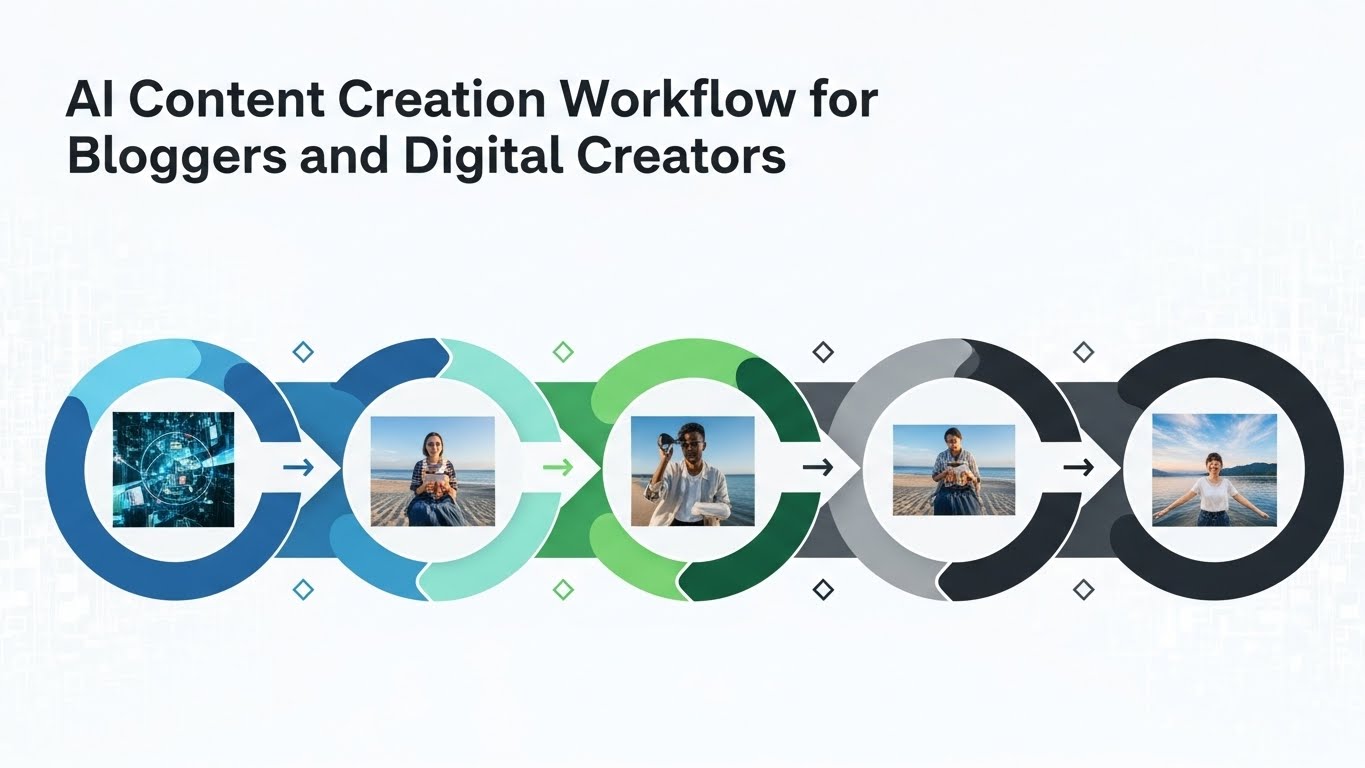
In 2026, the goal isn’t to hide that you used AI; it’s to ensure the AI didn’t do the thinking for you. Here is the 5-step “Human-Plus-AI” workflow for beginners:
- The Seed (Human): You come up with a unique angle based on a conversation you had or a problem you solved.
- The Skeleton (AI): Ask the AI to generate a detailed outline based on your seed.
- The Meat (AI): Have the AI draft sections one by one. Do not ask for the whole post at once—the quality drops.
- The Heart (Human): Add personal anecdotes, specific “inside-baseball” terms from your industry, and a unique opinion.
- The Polish (AI/Human): Use an editor like Grammarly or Hemingway to ensure the flow is perfect.
Part 9: Common Pitfalls for New Bloggers Using AI
1. The “Hallucination” Trap
AIs in 2026 are better, but they still lie. They will invent statistics and quote non-existent studies. As an entrepreneur, your reputation is your currency. Always fact-check every claim.
2. The “Over-Automation” Ghost Town
If you automate your blog so much that you never look at it, your readers will feel it. AI content without human oversight feels like a “ghost town”—there’s info, but no soul.
3. Ignoring the “SGE” (Search Generative Experience)
Google now answers questions directly on the search page. If your blog post just provides a simple answer, no one will click your link. Your AI writing tools should be used to provide deep-dive analysis that a search summary can’t replicate.
Part 10: Niche-Specific AI Writing Advice
For E-commerce Entrepreneurs
Focus on Product Description AI. Tools like Describely or Jasper’s Amazon-specific templates are life-savers. They don’t just describe the product; they focus on “Benefit-driven” copy.
For Lifestyle/Personal Bloggers
Focus on Claude 4. It handles the nuance of personal storytelling much better than the “efficiency-focused” AIs like Gemini.
For B2B/Technical Bloggers
Focus on Perplexity AI for the drafting phase. It cites its sources, which is vital for building trust in the B2B space.
Part 11: Future-Proofing Your Writing Career
As we look toward the end of 2026 and into 2027, the “writer” is becoming a “Prompt Engineer” and a “Content Curator.”
To succeed as a beginner, you must learn Advanced Prompting. This doesn’t mean “Write a blog post about dogs.” It means:
“Act as a veterinarian with 20 years of experience. Write a 1,500-word guide on senior dog nutrition. Use a compassionate but authoritative tone. Include a table of recommended proteins. Reference recent peer-reviewed studies on canine obesity.”
The more specific your prompt, the better your tool will perform.
Part 12: Conclusion – Which Tool Should You Choose Today?
If you are a new blogger or entrepreneur sitting at your desk right now, feeling overwhelmed, here is your roadmap:
- Start with Claude or ChatGPT. They are the most flexible. Spend a week learning how they respond to your voice.
- Pick one “Growth” tool. If you have a few dollars to invest, get NeuronWriter or Surfer SEO. Writing content that no one finds is the fastest way to fail.
- Focus on “Information Gain.” Before you publish any AI-assisted post, ask yourself: “Does this post say something that isn’t already in the top 5 results on Google?”
The AI writing tools of 2026 are more powerful than we ever imagined. They have leveled the playing field, allowing a single person to do the work of a 10-person content agency. But the tools are just that—tools. The “magic” still comes from your vision, your ethics, and your unique perspective on the world.
Happy writing! The digital world is waiting for your voice (even if it’s AI-assisted).